
.svg)
Everything You Need to Know About UCAT Results, Scoring and Percentiles
.webp)
Written By Team MedView
Reviewed By Callum Chalmers (Currently studying Bachelor of Medicine, Bachelor of Surgery - MBChB at University of Auckland)
Last updated on the 21st March 2026.
Navigating the world of medical and dental school admissions can be overwhelming (that's an understatement!), especially when understanding the importance of the University Clinical Aptitude Test (UCAT) scores.
As a vital component of your application, the UCAT score can significantly impact your chances of securing a spot in your dream program. But what exactly makes a good UCAT score? And how are your UCAT results calculated?
To help answer these questions, we've created a comprehensive guide on the intricacies of UCAT results, scoring, and percentiles, breaking down how it all works. Ready to dive in?
Decoding your UCAT scores
UCAT scores are made up of several components, including scaled scores for each subtest, a total cognitive score, and your percentile ranking compared to other test-takers. Percentiles indicate how your performance compares to other candidates sitting the exam in the same year.
Total cognitive section score
Each cognitive subtest is scored on a scale of 300 to 900, with raw scores converted into scaled scores based on performance.
The total cognitive score is calculated by summing the three cognitive subtests, resulting in a combined score ranging from 900 to 2700.
Subtest scoring:
- Verbal Reasoning (VR), Quantitative Reasoning (QR)
- Each question is worth 1 mark
- Decision Making (DM)
- Multi-statement questions are worth 2 marks
- Partial marks (1 mark) may be awarded for partially correct responses
Across the exam, some questions — particularly in Decision Making and Quantitative Reasoning — may carry more than one mark depending on complexity.
There is no negative marking, meaning attempting all questions is essential to maximising your score.
Typical score ranges (approximate)
Recent median scores (approximate trends, varying slightly each year) are:
- Verbal Reasoning (VR): ~600
- Decision Making (DM): ~630–650
- Quantitative Reasoning (QR): ~640–660
Situational Judgement Test (SJT) scoring
The Situational Judgement Test (SJT) is the final part of the UCAT and assesses your ability to evaluate real-world scenarios and identify appropriate behaviour.
The SJT is scored separately using Bands 1–4, where:
- Full marks are awarded for correct responses
- Partial marks are awarded for near-correct responses
Most Australian universities place less emphasis on the SJT compared to cognitive scores. However, some may still use it as a threshold or screening criterion, while others assess similar attributes through interviews such as the Multiple Mini Interview (MMI).
Stay ahead in UCAT prep! Get the latest updates, key dates, and insider tips—delivered monthly to your inbox. Sign up for ON THE PULSE with MedView, our monthly newsletter, and your UCAT digest!

UCAT percentiles and deciles
UCAT percentiles and deciles act as key benchmarks for comparing your performance against other test-takers.
- A higher percentile indicates stronger performance
- For example, the 90th percentile places you in the top 10%
Deciles group percentiles into bands:
- 9th decile → top 10%
- 8th decile → top 20%, etc.
Understanding where you stand can help guide your university choices and overall application strategy.
Monitoring UCAT score trends from previous years can also provide insight into competitiveness.
To convert your UCAT percentile to a decile, simply subtract the percentile from 10. For instance, a score in the 90th percentile would correspond to the 9th decile. You can also use this UCAT percentile calculator on the UCAT ANZ website to discover where you sit.
Good, average, and low UCAT scores
A good UCAT score is generally:
- 3000+ → Competitive
- 3100+ → Strong chance of interview
- 3200+ → Highly competitive (top-tier universities)
An average UCAT score usually sits between:
- 2600–2900
Based on recent trends, scores in this range:
- May struggle at UCAT-heavy universities
- But can still be viable depending on the university’s weighting
For example:
- Flinders University places heavier emphasis on ATAR (~80–90%)
- University of Tasmania uses UCAT as a secondary or tie-breaker factor
A low UCAT score typically sits below:
- ~2600
While this can be disappointing, there are still alternative pathways:
- Universities that do not require UCAT:
- James Cook University
- University of Sydney (undergraduate pathway)
- University of Melbourne (provisional entry)
- Universities with lower UCAT emphasis:
- Flinders University
- University of Tasmania
Alternatively, students can consider:
- Re-sitting the UCAT
- Pursuing a graduate-entry pathway (GAMSAT)
In general:
- A score in the 90th percentile or above is recommended for medicine and dentistry
- However, requirements vary by university and applicant category (e.g. rural pathways)
Receiving and accessing your UCAT results
After completing the UCAT:
- You will receive an email from Pearson VUE within 24 hours
- This includes access to your UCAT ANZ Score Report
Your results are:
- Available quickly (usually within a day)
- Automatically sent to participating universities
This ensures universities can directly access your UCAT results during admissions.
How universities use UCAT scores
Universities use UCAT scores in different ways:
- Some use UCAT as the primary interview selection tool
- Others combine UCAT with:
- ATAR / GPA
- Interview performance
Another key difference is whether universities assess:
- Total cognitive score, or
- Individual subtest scores
Examples:
- Total cognitive score:
- UNSW
- Monash
- University of Queensland
- Curtin
- Flinders
- University of Tasmania
- Subtest weighting:
- Western Sydney / Charles Sturt (JMP):
- VR ~60%
- DM ~10%
- QR ~10%
- AR ~20%
- Western Sydney / Charles Sturt (JMP):
- Special cases:
- Newcastle / UNE → UCAT used for interview selection only (not final ranking)
- UQ → UCAT heavily used for interview offers
Because each university differs, it is critical to review individual requirements before applying.
UCAT score trends from previous years
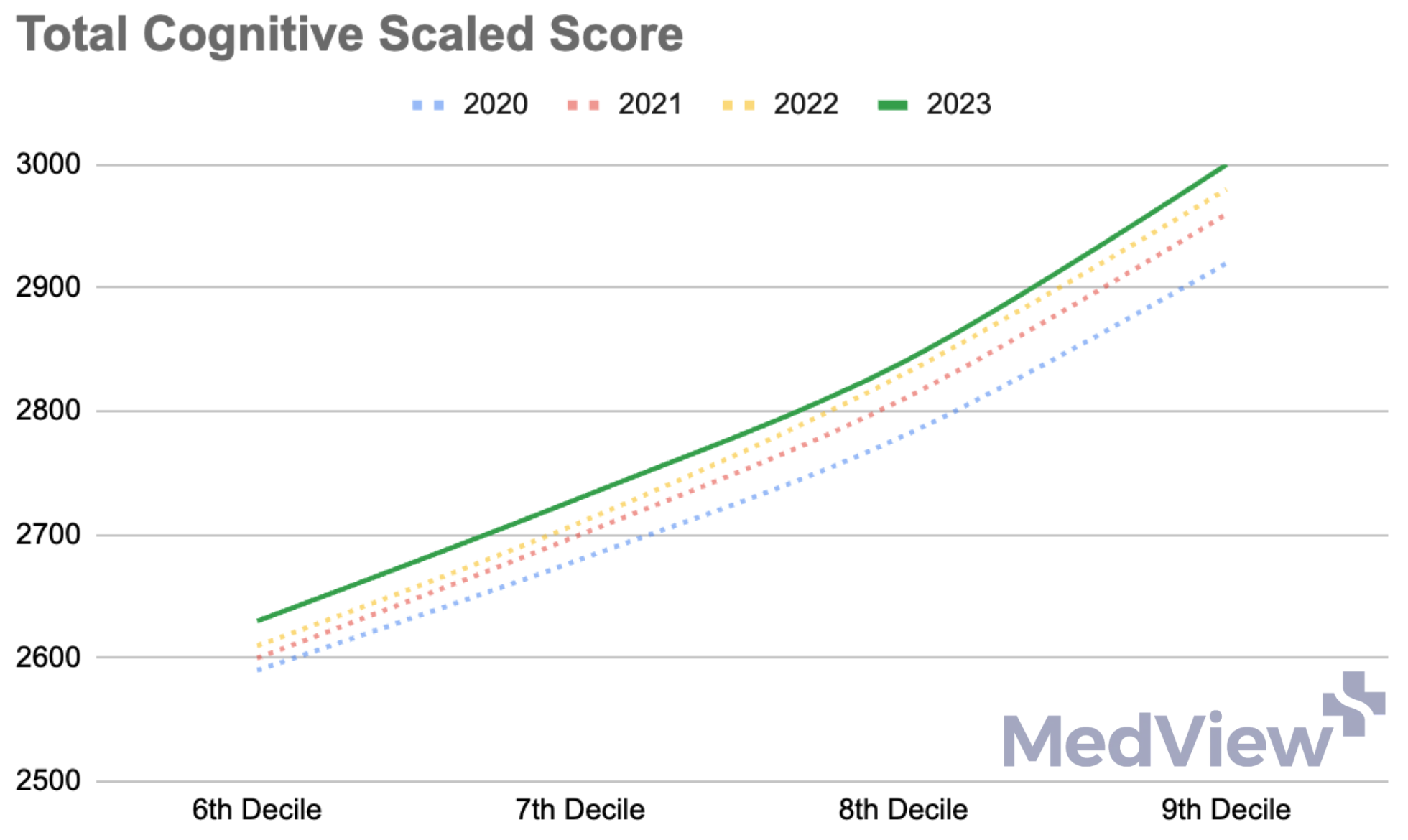
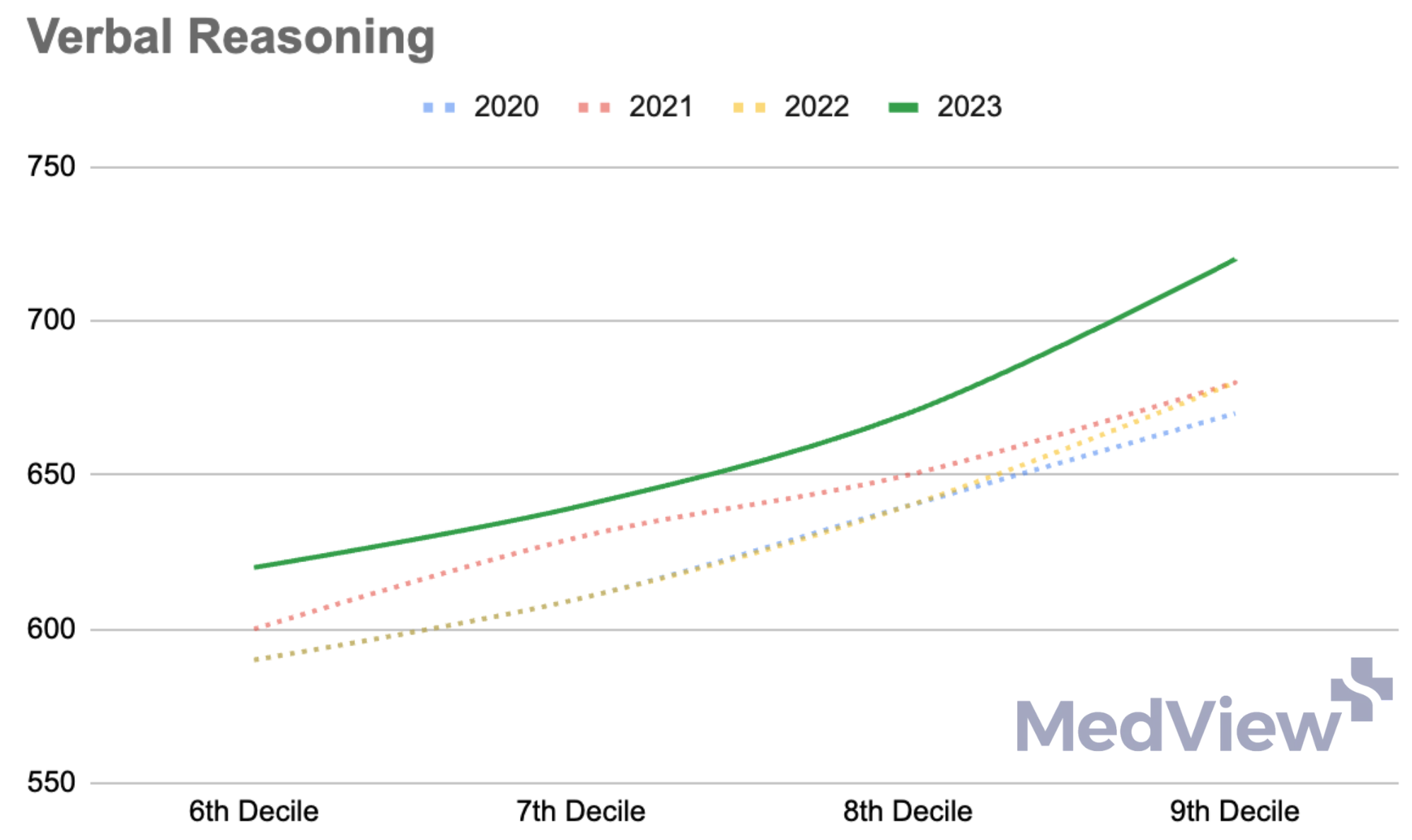
Analysing UCAT trends can provide useful insight into competitiveness.
- Median scores have gradually increased [1,2]:
- ~2520 (2021)
- ~2530 (2022)
- ~2550+ (recent years)
- Competitive interview scores:
- Generally 3100+
Subtest trends:
- Verbal Reasoning has shown the most variation
- DM, QR, AR have remained relatively stable
Verbal Reasoning is often:
- The lowest scoring section
- Considered the most difficult by students
Recent increases in VR scores may reflect:
- Greater focus in preparation
- Improved training strategies
UCAT preparation tips
Preparing for the UCAT can feel overwhelming — and for many students, it is. However, with the right strategy, structure, and support, the process becomes far more manageable and significantly more effective.
Achieving a high UCAT score isn’t just about working harder — it’s about working smarter. The students who perform best are those who take a strategic approach to preparation and continuously refine their performance.
Key factors that play an important role in achieving a high UCAT score include:
- Effective preparation
- Following a structured study plan that balances all sections of the UCAT
- Gradually increasing difficulty and exposure to exam-style questions
- Time management
- Learning how to work under strict time pressure
- Developing the ability to move on quickly and avoid getting stuck on difficult questions
- Understanding your strengths and weaknesses
- Identifying which sections need the most improvement
- Allocating more time and effort where it will have the greatest impact
- Review and reflection
- Analysing mistakes rather than just completing questions
- Understanding why an answer was wrong and how to improve
- Consistency over intensity
- Regular, focused practice is far more effective than last-minute cramming
In addition, seeking external support — whether through tutors, structured courses, or expert guidance — can make a significant difference. Many high-performing students benefit from having personalised feedback, accountability, and proven strategies to accelerate their progress.
How MedView helps you maximise your UCAT score
This is where MedView stands out.
We understand that applying to medical school is not only complex and confusing — it’s also more competitive than ever before. A strong UCAT score alone is not enough; you need a complete, strategic approach to your application.
MedView Education takes medical school admissions to the next level through:
- Personalised UCAT preparation
- Application and admissions strategy
- Interview (MMI) tutoring
- Extracurricular and portfolio mentoring
We recognise that every student is different — with unique goals, strengths, and challenges. That’s why everything we do is tailored specifically to you.
Our proven process
Our approach is designed to maximise your chances of success at every stage:
1. Discovering your goals
Your journey begins with an initial consultation, where we identify your goals, target universities, and ideal pathway into medicine.
2. Identifying your strengths
We assess your academic profile, UCAT potential, and overall competitiveness — highlighting both your strengths and areas for improvement.
3. Building a personalised game plan
You’ll receive a structured, step-by-step strategy tailored to your timeline, strengths, and target universities.
4. Assembling your expert team
You’ll be matched with a dedicated team of:
- Admission specialists
- Medical students
- UCAT tutors
- Mentors and doctors
5. Choosing your best-fit medical schools
We help you strategically select universities where you have the highest chance of success — not just where you want to go.
6. Mastering every requirement
From UCAT to interviews and applications, your team supports you through every stage to ensure you are fully prepared and competitive.
Why students choose MedView
Our results speak for themselves:
- UCAT students are 5x more likely to receive an interview
- Students are 4.5x more likely to gain admission into an Australian medical school
Beyond tutoring, we provide a complete admissions ecosystem — ensuring no part of your application is left to chance.
Summary
While the UCAT and medical school admissions process can feel complex, understanding how your score is used — and what score you need — is one of the most important steps in planning your pathway into medicine or dentistry.
Each university applies UCAT scores differently, with varying cut-offs, weightings, and selection criteria. That’s why having a clear strategy — tailored to your strengths and target universities — can make a significant difference to your success.
STAY AHEAD OF THE COMPETITION!
Stay ahead of the competition
You don’t have to navigate this process alone.
If you want to stay up to date with the latest UCAT trends, cut-off scores, key dates, and admissions insights — plus gain access to expert strategies used by top-performing students — join ON THE PULSE, MedView’s monthly UCAT and admissions newsletter.
By signing up, you’ll get:
- The latest UCAT cut-off scores and trends
- University-specific admissions insights
- Expert UCAT preparation strategies
- Medical & dentistry application tips
- Important deadlines and updates
Stay informed. Stay prepared. Stay ahead.
Frequently asked questions
What is the top 1% UCAT score?
To be in the top 1% of UCAT candidates, you typically need a score of ~3290+ out of 3600, placing you in the 99th percentile .
What is a good UCAT score in Australia?
A score of 3000+ is generally considered competitive, with 3100+ significantly increasing your chances of receiving an interview at many universities.
What is the highest possible UCAT score?
The maximum UCAT score is 3600, based on the combined score of the four cognitive sections (each scored 300–900).
What is the typical UCAT score for medicine and dentistry programs?
Most competitive applicants aim for at least the 90th percentile, although requirements vary depending on the university, pathway, and applicant pool each year.
References
- https://www.ucat.edu.au/media/1539/summary-statistics-for-2023.pdf
- https://www.ucat.edu.au/media/1513/summary-statistics-for-2022.pdf
- https://www.ucat.edu.au/media/1371/ucat-anz-2019_summary-stats.pdf

Join the MedView student success family